

Southeast Asia values relaxation and leisure as a daily essential cultural practice
why adopt a work hard play hard mentality when play is woven into every aspect of our daily lives and cultures

Something that I admire about Southeast Asia, and warm cultures in general, is this general relaxed attitude when it comes to getting things done. Productivity doesn’t always come in the form of hustling, but instead, work can be conducted at a more lenient, and dare I say, enjoyable pace. Leisure is not something that is done only on vacation, but is threaded within the seams of everyday life. In Southeast Asian mentality, work-life balance is actually life-work balance. Before capitalism has forced itself on us, rest was seen as an important part of living. Relaxation and rest is another aspect of community bonding. There are a few habits that Southeast Asian cultures have been doing that we can call a relaxed way to be productive.
The concept of leisure can even be found among philosophers as far back as the 16th century, with Nguyễn Bỉnh Khiêm contemplating on the concept of Nhàn1 and tying it back to relationship with the natural world.
“Thiên hạ ai là kẻ sĩ cao khiết; An nhàn, ta là tiên trên trời”
(Who is the noble scholar in the world; leisurely, I am the heavenly fairy) - Nguyễn Bỉnh Khiêm
In his writings, Nguyễn Bỉnh Khiêm argued that leisure is a pursuit of intentional contemplation and finding joy in nature rather than an idle pursuit. In a world of political upheaval and troubles that plagued his time, adopting a leisure mentality allows someone to break free from worldly pursuits and re-connect with nature.
Now this isn’t to say that hard work is non-existent in Southeast Asia. Traditionally, most societies in the region were rice-growing cultures, which, if you’ve spent even a day in the fields, is quite a laborious task. It literally takes the whole village to partake in the entire process, from the planting to the harvesting, and then to selling and creating the many rice-based dishes that range from sweet, savory, to spicy. It should be noted however, that rice planting and harvesting wasn’t just serious work, but instead a community oriented task that involved singing and even a bit of enjoyment. The Ifugao people in the highlands of the Philippine Cordilleras traditionally sang the Hudhud while they planted rice among their famed terraces. Similarly, the tradition of Aseuk Hatong in West Java, Indonesia combines rhythmic tapping of the ground with a steady beat and songs while farmers plant.
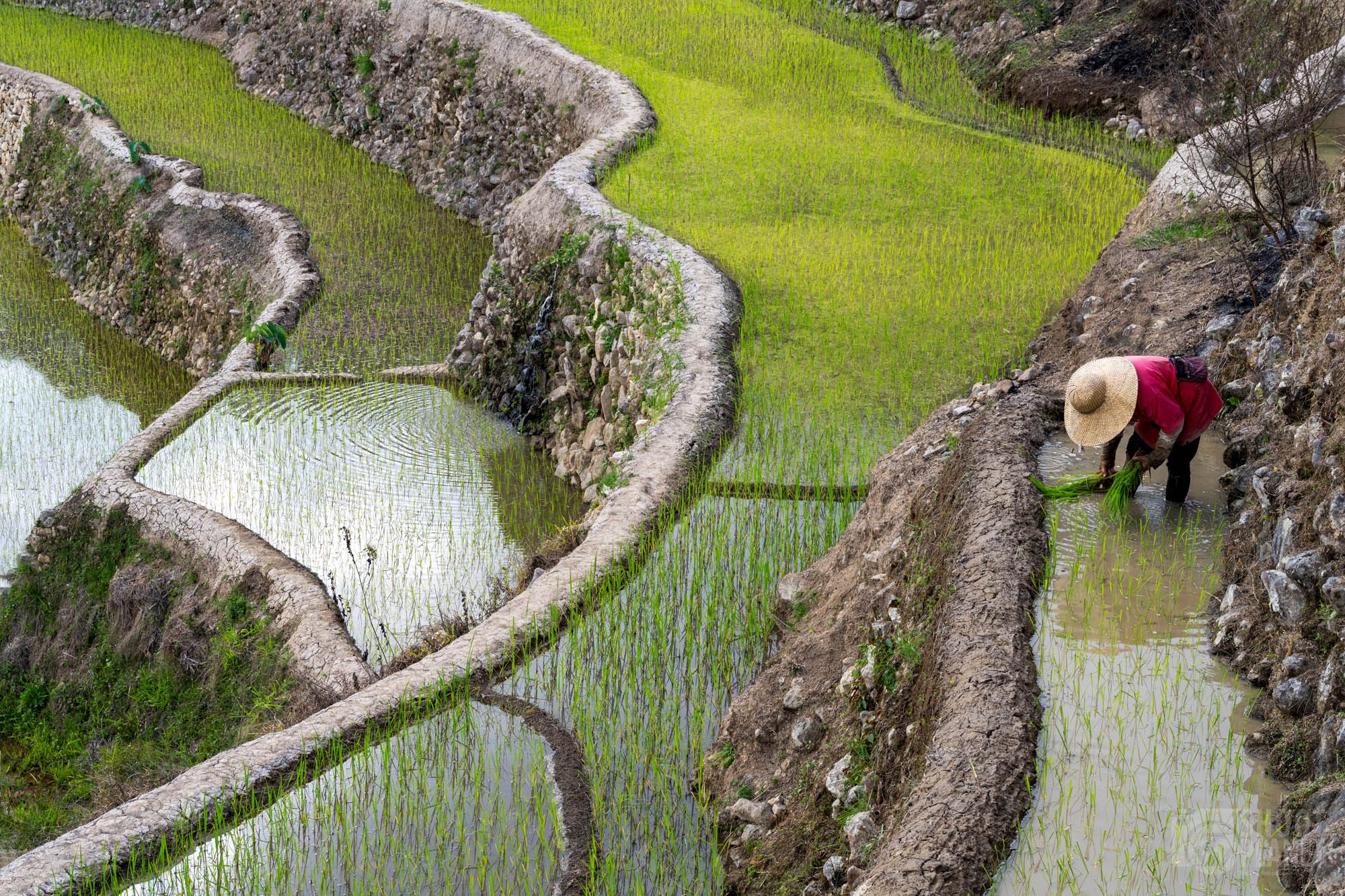
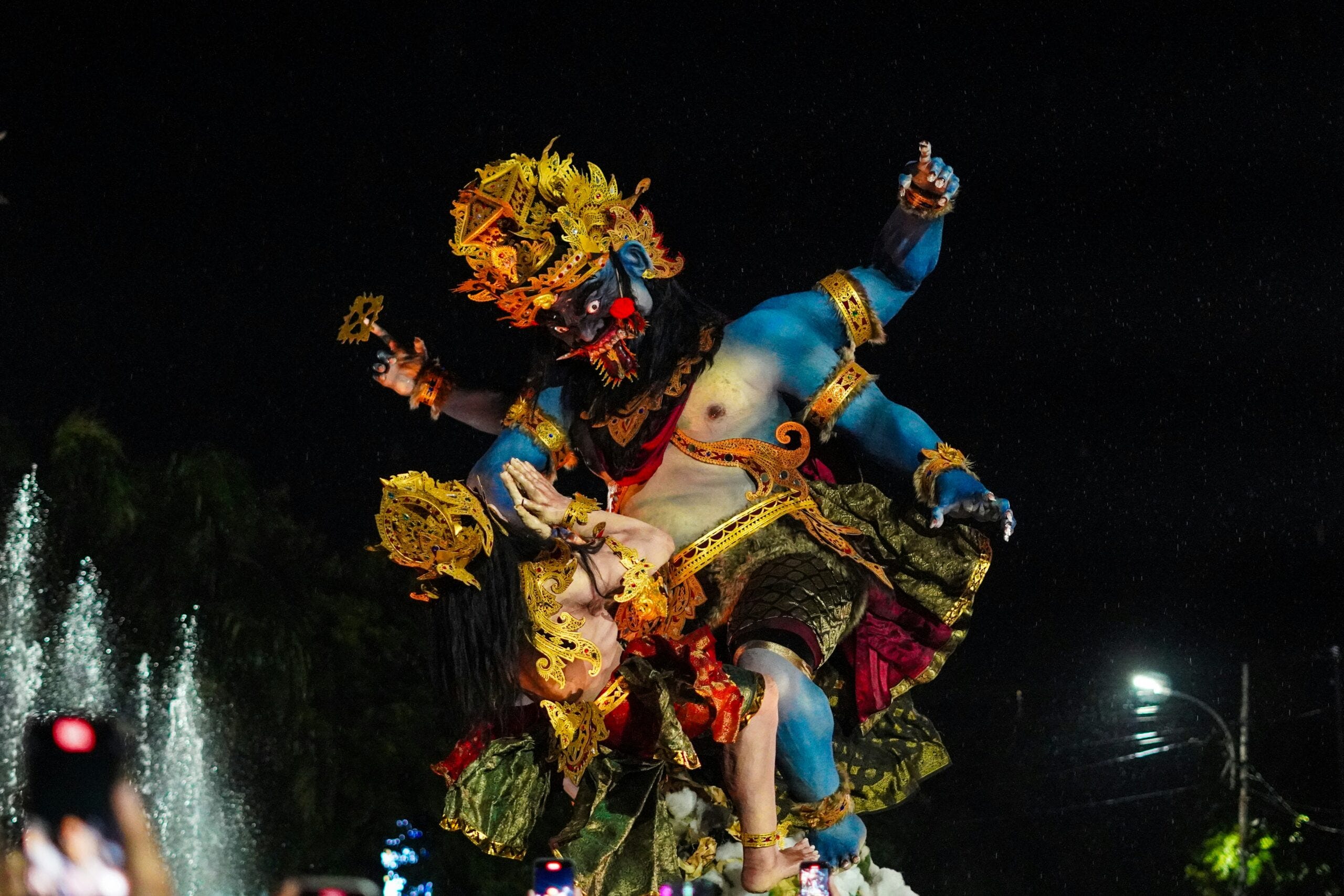
Even with the arduous work that comes with rice farming, there are oftentimes enforced periods of rest, and traditional labor does not follow the corporate 9-5 (or the even worse 996 rule) but instead followed the agricultural cycles. Tungul2 is an act of forced rest that is enacted in Ifugao society following the conclusion of the harvest rites where no agricultural work is done, otherwise it would be taboo. The heat of the day3 is seen as a period of rest for rice farmers, as the midday is a period to rest. In traditional Vietnamese rice farming prior to the 1980s4, farmers would grow one rice crop per year and let the field rest between the periods of May and December. In Thailand, farmers can rest for several months5 after a harvest before setting up the field for the next years crop. In Bali, Nyepi is a day where the entire island mandates a period of rest and reflection, to the point where even the airport is closed. During Nyepi, this day of silence is enforced by community cooperation and cultural respect.
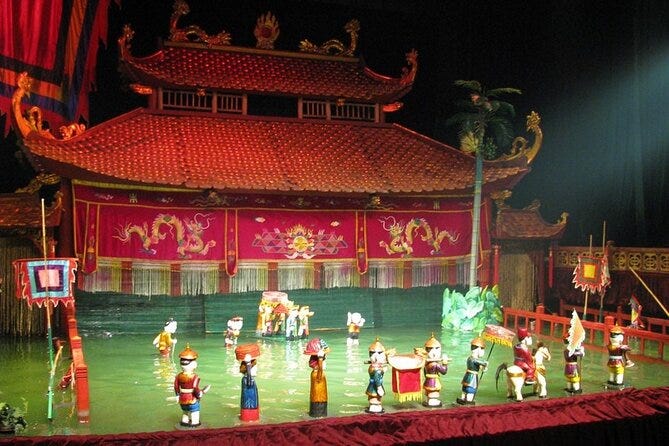
The rice fields are also places where artistic innovation was born rather than just mere fields of arduous labor. Flooded rice paddies in northern Vietnam became a stage for the unique water puppet shows that were an integral part of rural entertainment dating back to the 11th century.
While modern work cultures in urban Southeast Asia have adopted traits that lean towards being hustle-oriented, this imported hustle culture oftentimes exists alongside cultural norms of taking it easy, having a break, and even enjoying the little moments. These relaxed cultural practices show up in many ways.
Time Fluidity
In contrast to the time-punctual East Asian and at large Western societies, Southeast Asia operates differently. Rather than behaving like a strict binary, like the slow waters of the Mekong River, time flows smoothly, unrushed. In Indonesia and Malaysia, this is called jam karet, or rubber time. The Philippines just call it Filipino time, while in Cambodia, it’s called Cambodian time. Appointments are guidelines rather than strict commitments.
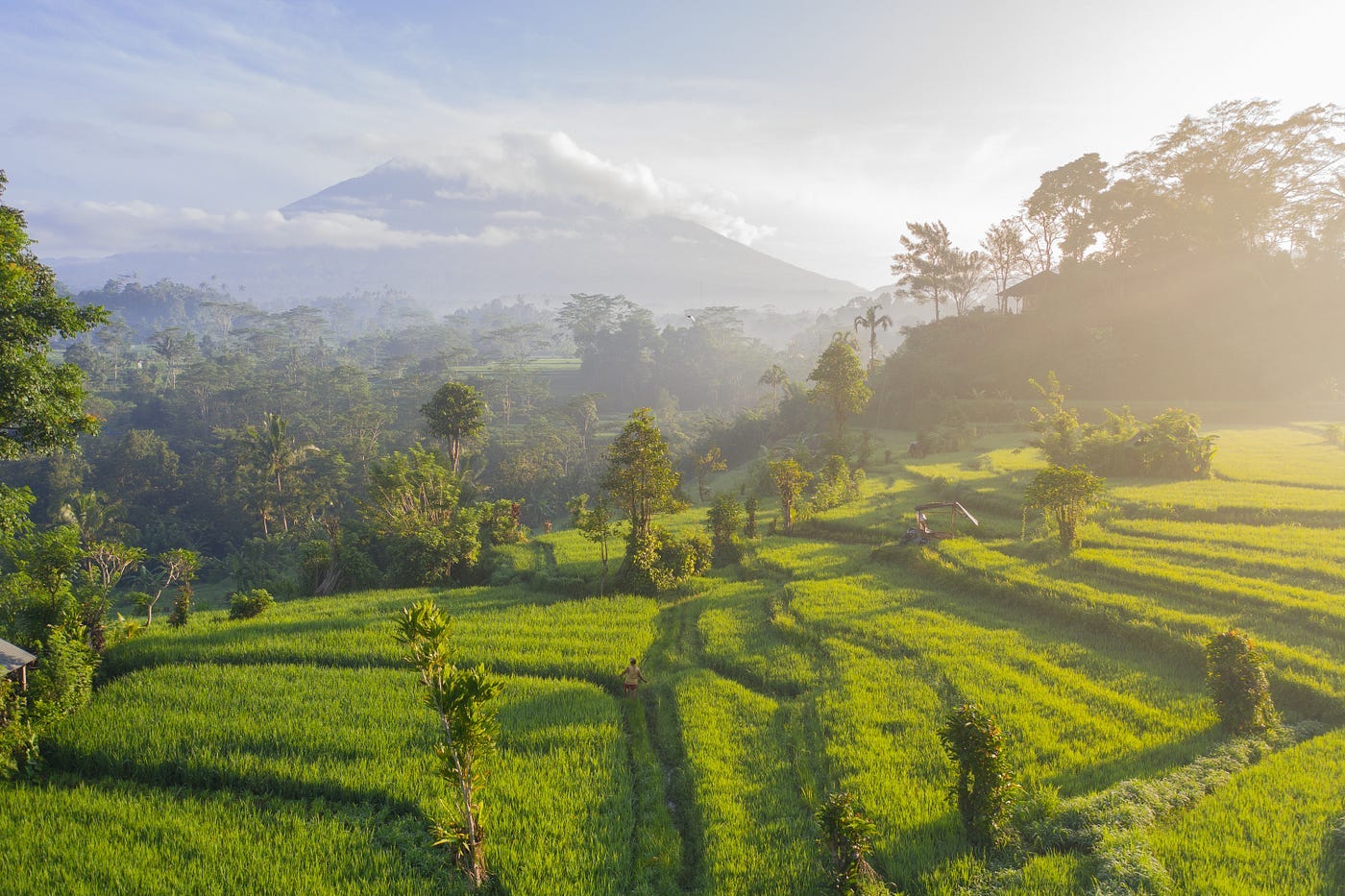
This isn’t to excuse poor governance or the lack of proper infrastructure that would make someone late to an appointment whether they intended to or not, but what time fluidity allows for is flexibility and grace, a concept that would make a Dutch man angrily clutch the handles of his bike. “Time is money”, a concept so familiar to societies like Japan and the West contrasts the concept in which time is viewed like rubber, where it can stretch and shorten or bend. While persistent lateness can be seen as disrespect, and rightfully so, the fluid nature of time is an acceptance that plans are adaptable and may be subject to change.
Work is Fun, Actually
In Thailand, the mentality of sanuk and sabai-sabai are common cultural practices. Sanuk doesn’t have a direct translation into English, but it’s generally understood to mean “fun” or “pleasurable”, while sabai-sabai is a common Thai phrase to mean “relax” or “take it easy.” This shows up in all aspects, especially at work. Business meetings and tasks are approached from a sense of playfulness6, with a relaxed and lighthearted approach. While an outsider may see this working style as unproductive, work eventually gets done. The mentality of work-hard-play-hard isn’t widely practiced because enjoyment and fun is woven into workplace contexts. Work and enjoyment are not mutually exclusive. A job lacking a sense of fun is a legitimate reason for a Thai person to quit. If doing something is not fun, it is simply not worth doing. Upholding sanuk is seen as a way to reduce tension and lessen aggression.
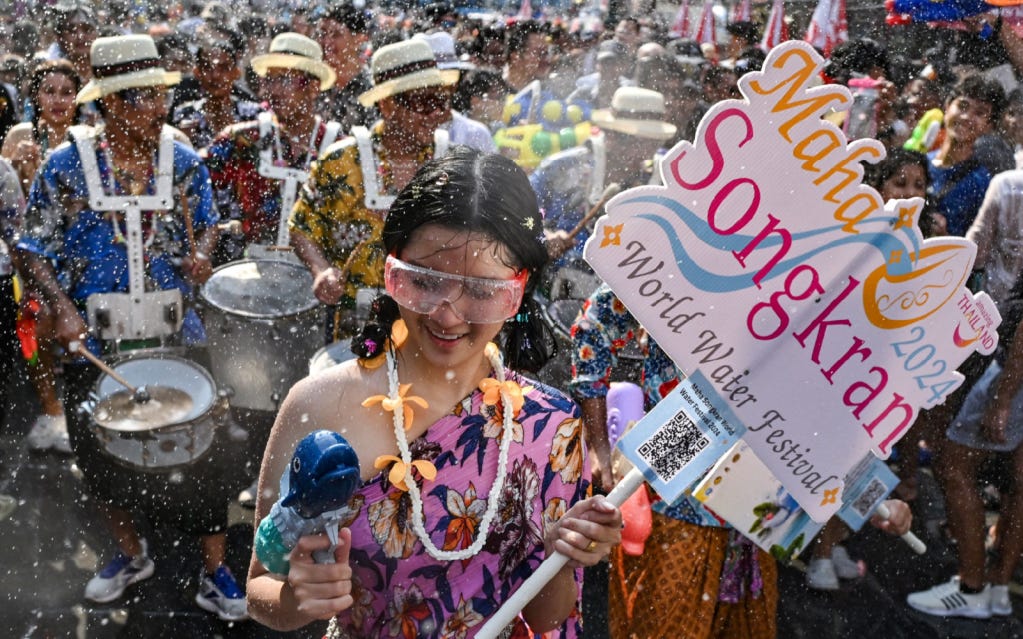
A similar approach to life and work is also seen in Indonesia, known as the santai mentality. Similar to sabai-sabai, santai7 is generally translated as “relax”, and like it’s Thai counterpart, santai acts as a philosophy. Santai mentality promises that things will get done, but in the meantime, the process is meant to be enjoyed, so it’s a calling to enjoy the moments of slowness, and practice presence. In santai, there is a more harmonious way of living, so punctual deadlines typically go against the philosophy. There is this belief that the most productive thing anyone can do is relax and allow things to unfold.
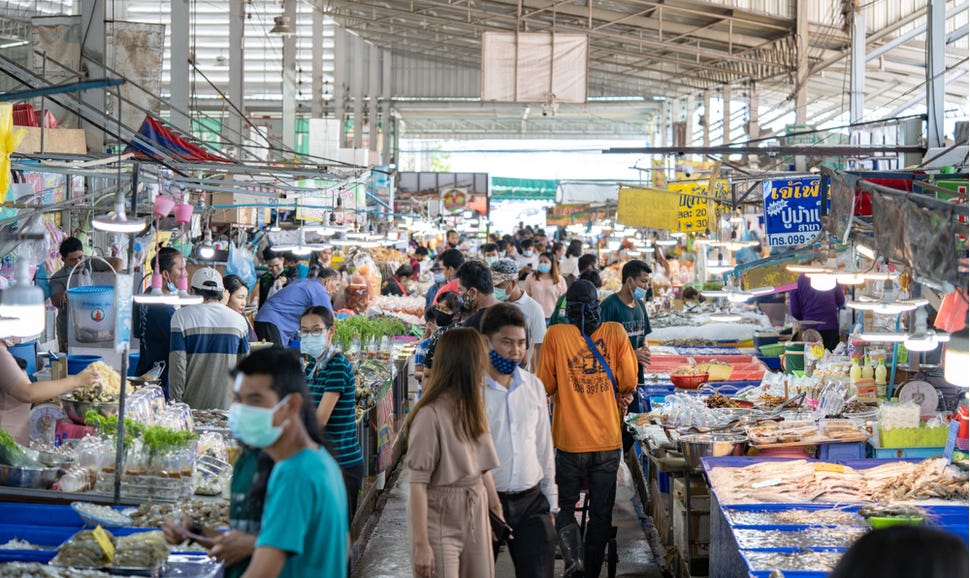
Filipino philosophy follows a similar mindset, where work and fun are harmonized and can co-exist at the same time.
“On the other hand, the Filipino blends work with leisure. For instance, planting and harvesting is not purely work, for together with it go singing, drinking, and eating. For the fishermen who draw their nets, some of their companions roast the catch and drink tuba on the seashore. Working is more personalistic, and leisure is a part of it. The above-mentioned rural examples can also be applied in the city. Market vendors join work with the leisure of gossip and listening to the radio. And in the city, the office workers stress not pure work but the pleasure of camaraderie, i.e. the tendency of combining pleasure with work.”8
These examples in the quote from “Notes on the Filipino Philosophy of Work and Leisure” is quoted as a contrasting mindset against the strict binary where “duty comes before pleasure”, and shows how pervasive this duality of work-leisure is among all social classes.
Honoring Our Natural Circadian Rhythm
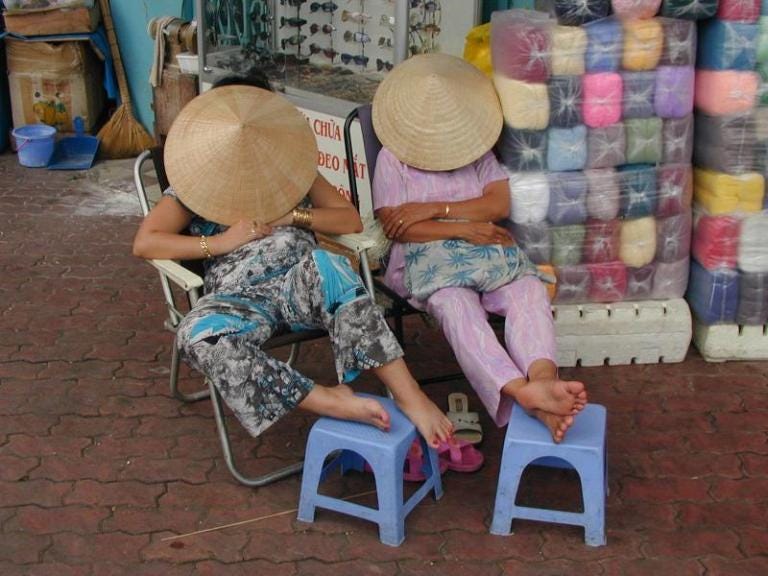
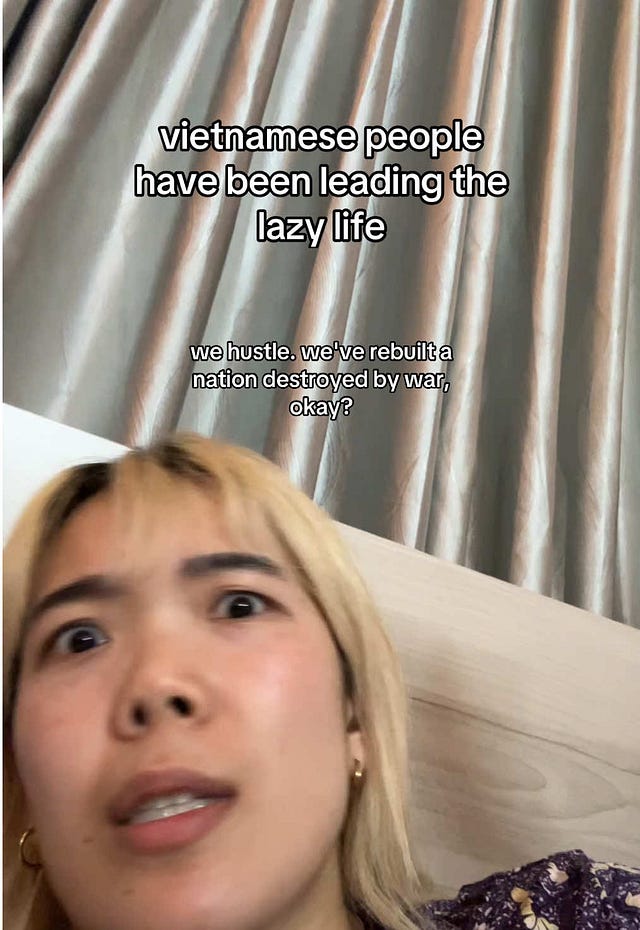
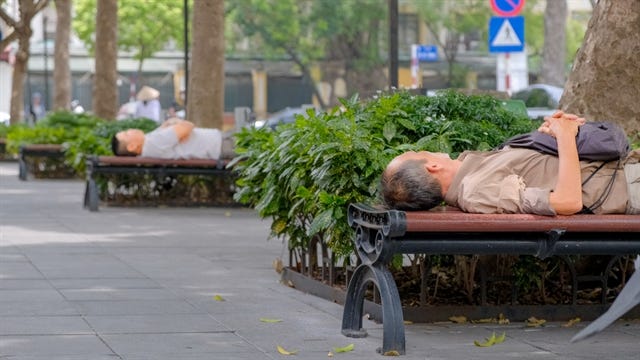
There are many things that unite Southeast Asians (now colloquially called SEAblings after some internet drama), such as tropical weather, smiling, our affinity for tropical fruits, coconut milk, interesting modes of transport, rice, and napping. Midday is the ideal time for many to take a nap, and its common to see many people even in the cities take naps, the activity being ubiquitous in the region.
 Tiktok failed to load.
Enable 3rd party cookies or use another browser
In the Philippines, this practice is known as siesta (disclaimer: just because the word itself is Spanish doesn’t mean the cultural practice itself has Spanish origins, there is a habit of colonizers assigning a name of a practice that has already existed), where many of the working-class take a midday break. In Vietnam, giấc ngủ trưa, or the midday nap9, is widely practiced among the general population, especially among those involved in manual labor. In Indonesia, the phrase “tidur siang”10 roughly translates to “afternoon nap”, and is woven into the fabric of life rather than seen as a sign of laziness. This cultural practice is found also found in Cambodia11, Laos12, and Myanmar13, showing a broad acceptance of midday napping. Instead of being seen as lazy, Southeast Asians generally see it as a regular part of the day and accept that the act of napping is a natural rhythm that should be respected.
A Culture of Snack Breaks
Any culture that has a snack break or a coffee and tea break integrated into daily life shows that the culture values at least in some form, casual relaxation. This break in between the workday is a time for a small meal as well as a chance to socialize in a casual context. These snack breaks are part of a larger culture of community building, of maintaining and participating in social harmony, and being part of a greater society.
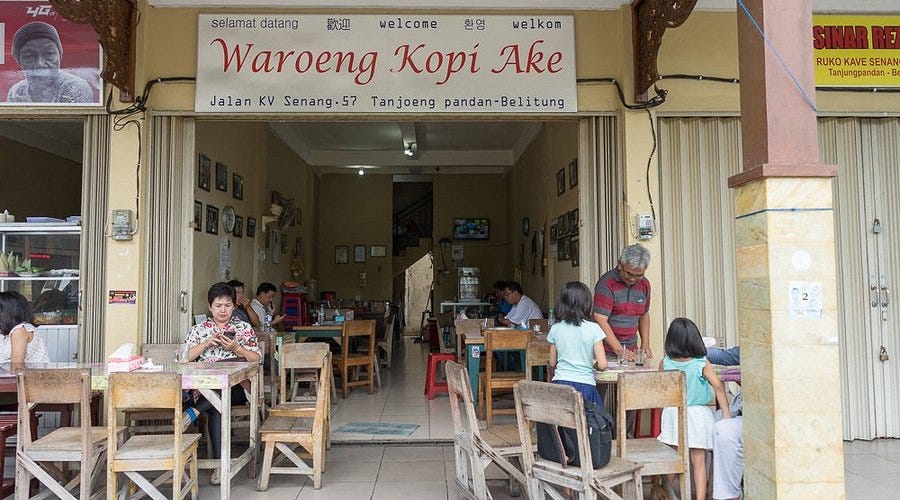
Southeast Asian countries have a warm climate that allows for the production of coffee beans, so it’s inevitable that coffee culture and the associated snack culture flourishes here. The warung kopi in Indonesia are places where ngopi culture comes to life. Ngopi pagi14 is a morning ritual where people take time to recharge and reconnect. The warung kopi was also a place of socialization, where news spread among patrons over a table of locally grown coffee and small snacks such as krupek, pisang goreng, kue, and rempeyek. Meriendas in the Philippines serve a similar purpose as a pause in between the rhythm of school and work, but also acts as a meal in between meals. Merienda culture15 doesn’t have strict rules on the kinds of foods that can be eaten, as they can range from savory kwek kwek and isaw to sweet foods like taho, halo-halo, and kakanin. Baked goods like pan de sal and ensaymada with locally grown coffee are also common merienda items.
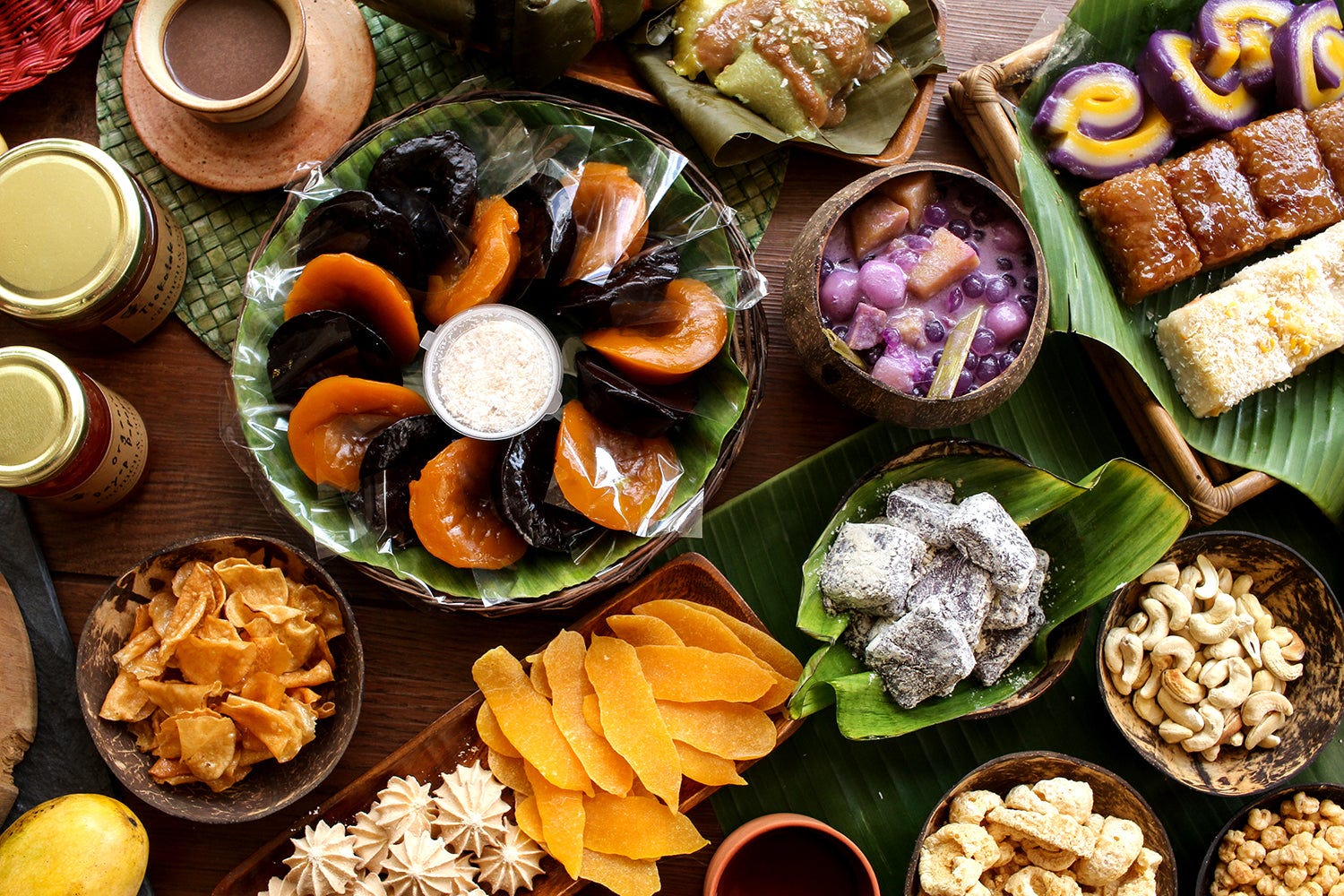
The pervasive street food culture in the region, with availability at all hours of the day allows a region wide snacking culture. The snacking culture in Vietnam is seen as one of Asia’s fastest growing markets. A meal in between meals suggests that Vietnamese people value times to take a break, with street vendors meeting the demand. Snacks can range from the sweet che and banh lot to more savory Bánh Xèo and Nem Lụi.
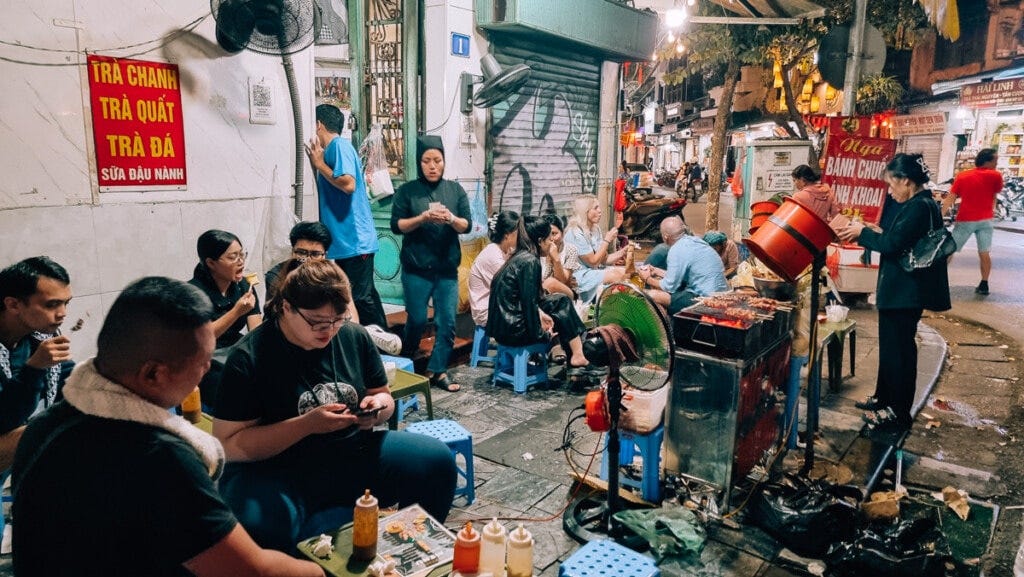
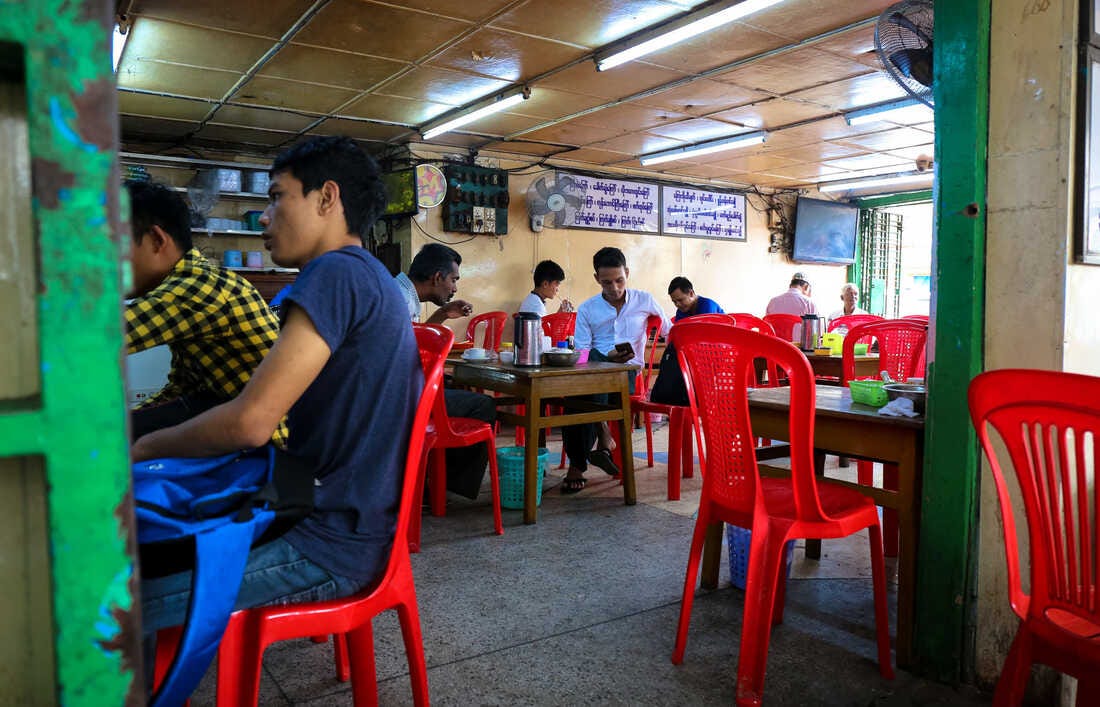
Additionally, tea culture in Vietnam calls for a participant to sit down and spend time with others and be part of the community. Drinking fresh tea is synonymous with taking a break16 from working in the fields and decompressing with your neighbors. A similar cultural practice is also seen in Myanmar, where teashops are a primary social hub open at all hours of the day. Laphet yay is a local variation of milk tea that uses black tea and condensed milk with a sweet taste.
In nearby Thailand, Thai people have gained a reputation for being snackers, picking up quick meals from the street. Food items such as moo ping, khanom krok, pattongo, and bua loi reflect the diverse street food that serve the demand for snacks among the Thai population.
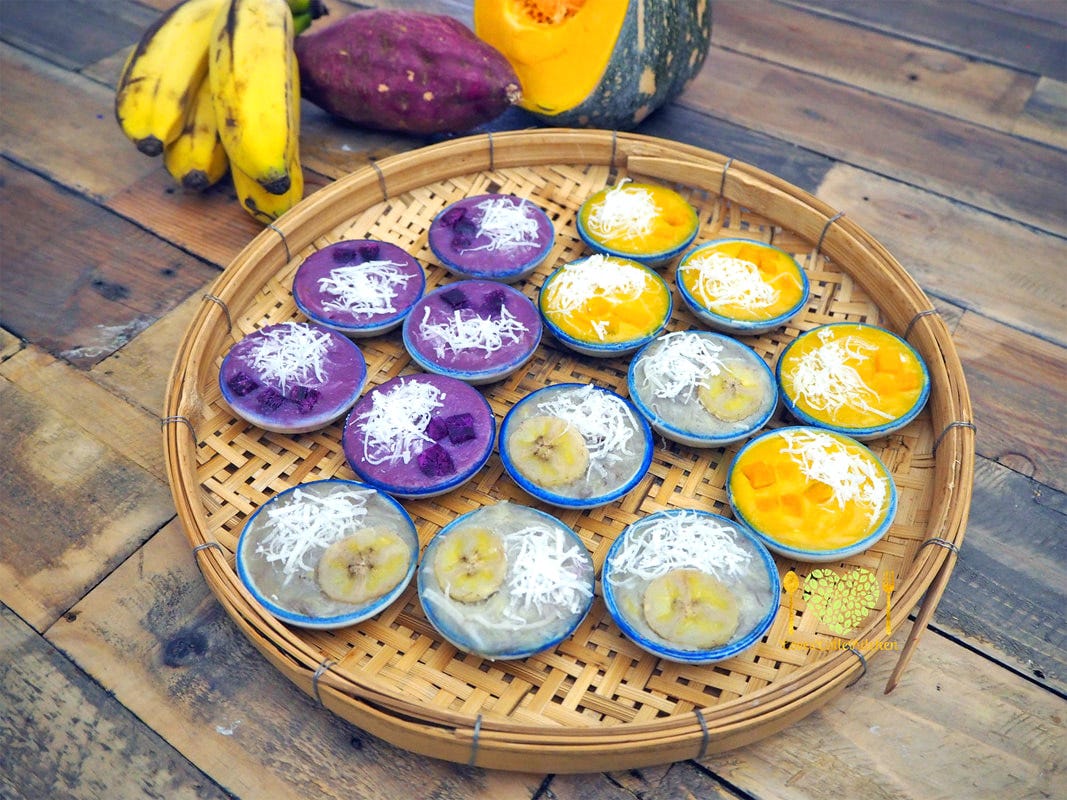
In these countries, snacking has no rules, is varied and informal, yet widely practiced and an ingrained part of daily life. The pervasive nature of street food, coffee culture and snacking habits speaks to a broader pattern of daily leisure, where relaxation is accepted as a regular part of someone’s life. Relaxation allows for flexibility, in this case, manifesting as freedom to choose the snacks someone might want to indulge in.
Maybe we don’t need to suffer in order to get things done
If something is not fun, then why do it? Is there really a need to suffer and struggle in order to achieve the things we want, or even just finish daily tasks? Shouldn’t the pursuit of daily activities or going through the process of creating or studying be something enjoyable rather than trigger feelings of dread? It’s safe to say that Southeast Asian work culture at large allows for human-centric working environments. Societies that highly value Western capitalism encourage burnout, overtime, and high returns, and while it might lead to prosperity, it doesn’t allow for social connections, nor does it allow for leisurely pursuits free of guilt. Capitalism doesn’t care if you like or dislike something, it demands productivity through maximum efficiency, oftentimes at the expense of someone’s happiness. Sacrifices must be made in order to create profits. It rewards hyper-individualism, an existence devoid of genuine connections or of any depth.
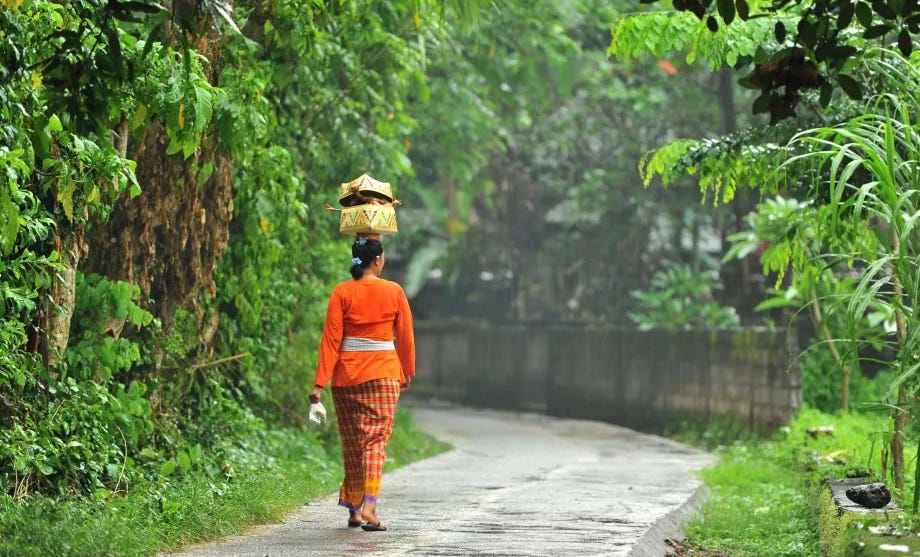
A culture that is founded on collectivism and weaves pleasure and relaxation encourages the participant of that culture to take care of their own needs, as well as participate in the social sphere. Where social harmony is a value, leisurely pursuits thrive. The leisure mindset provides mental value and encourages people to seek connections, to enjoy the work you are doing, and release yourself from the pressure of hitting high reviews in order to climb up a ladder. Making efforts in your work is always a noble pursuit, but so is taking part in leisure. A culture where sanuk or santai is the norm understands that leisure is as important as productivity, and the lack of leisure takes away the humanity in work. The existence of the relaxed mindset also heavily suggests that suffering for the sake of work is unnecessary, because the idea of suffering for work implies a lack of sanuk in someone’s life.
THE VIEWPOINT “LEISURE (NHÀN)” OF NGUYEN BINH KHIEM by Cao Xuan Long
https://aatbetasite.wordpress.com/culture/
https://www.thekitchn.com/how-rice-is-grown-in-vietnam-221419
https://ethnobiology.org/forage/blog/growing-rice-cost-vietnams-mekong-river-delta#:~:text=Two%20Vietnamese%20policies%20shifted%20rice,5%2D6%20applications%20per%20season.
https://www.cpamedia.com/article.php?pg=features&aid=220331124329
https://www.bbc.com/travel/article/20151119-can-thailand-teach-us-all-to-have-more-fun
https://indonesiaexpat.id/lifestyle/the-art-of-slowing-down-how-indonesias-santai-lifestyle-can-inspire-your-new-year/
chrome-extension://efaidnbmnnnibpcajpcglclefindmkaj/https://archium.ateneo.edu/cgi/viewcontent.cgi?article=1915&context=phstudies
https://vietcetera.com/en/midday-snooze-vietnams-nap-culture-explained
https://ccgit.crown.edu/cyber-reels/take-a-nap-bahasa-indonesian-translation-and-benefits-1767646591#:~:text=%E2%80%9CTidur%20siang%E2%80%9D%2C%20the%20Indonesian,listen%20to%20your%20body’s%20needs.
https://60x27.wordpress.com/2012/09/20/cambodias-siesta-culture/
https://acoupletravelers.com/are-laotians-the-lazy/
https://www.smithsonianmag.com/multimedia/photo-of-the-week-a-quick-nap-myanmar-2714754/#:~:text=Photo%20of%20the%20Week:%20A%20Quick%20Nap%2C,captures%20a%20sleepy%20young%20monk.%20Lois%20Summers.
https://fnb.coffee/blog/the-rich-tapestry-of-indonesia-coffee-drinkers/?srsltid=AfmBOorROYM-yKRJtu_tkjr1L_hhMKSDl2qDZVqeEknJu3_-UNgF4oop
Every article I have come across seems to claim that merienda culture was brought over by the Spanish, but the fact that snacking culture like this exists in the other neighboring countries is making me doubt that claim. I will always say this, just because a practice has a Spanish name doesn’t mean it came from the Spanish, and in fact, might just be a term adopted to describe a pre-existing cultural practice whose original name might be lost.
https://digitalcollections.sit.edu/cgi/viewcontent.cgi?article=2154&context=isp_collection&utm_source=chatgpt.com
Very nice. On the Indolence of the Filipinos 2.0!
really interesting post here dali, because I realise there are some parts to it that I wholly don’t relate to but also recognise that’s really what my culture is like. i’m an indonesian currently living in australia - middle-upper income chinese-indonesian from jakarta in particular which to me is everyone i know but in reality an extremely narrow subset of all indonesians ever.
relaxation doesn’t come as naturally to me as this article suggests, which is both the australian (work and live in australia) and internet (gen z) in me speaking. i get really frustrated at this jam ngaret and I find it generally comes from a childhood where i was actually discouraged from arriving to places on time!! you wouldnt want to be seen as too eager, too try hard, too doormat-like. leave that to the singaporeans! we have different definitions of leisure, i’ve found, and sometimes it goes at odds because everyone thinks they’re right! my family cannot relate whatsoever with me writing a newsletter and think WFH is the equivalent to a holiday and therefore have full right to ask me to do stuff, for example. then again, put them in a coffee shop with good company for conversation… and they hate it. because that’s not leisure to them either.
either way I’m glad to have this southeast asian lens on time, and you’re right as a whole we do value rest and relaxation in ways the western mind - and even mine really, cannot comprehend. it’s part of the magic, something in our sugary drinks :)))